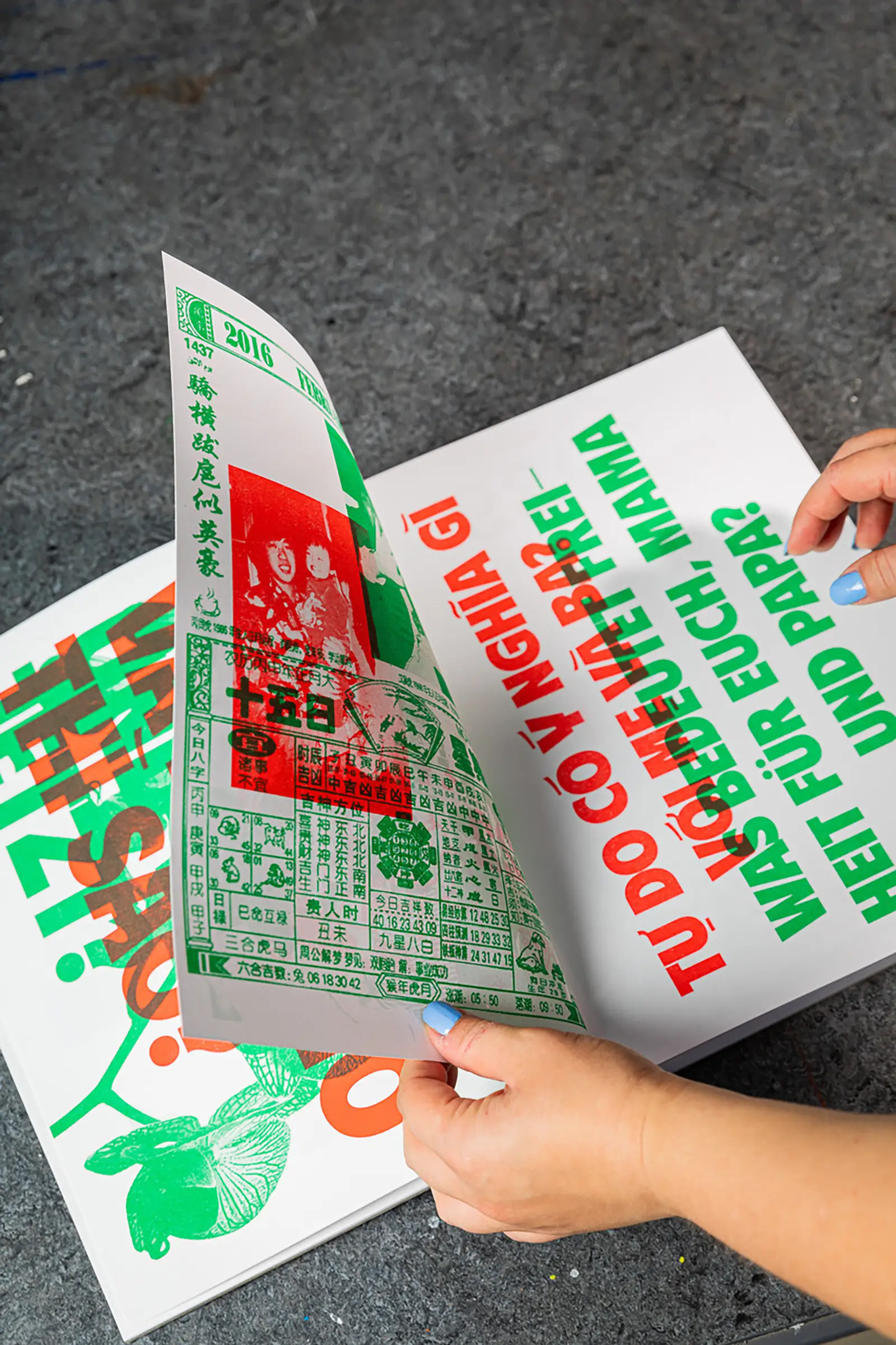
At Nuremberg Tech, students are not only taught design skills, they are also encouraged to become authors. The book project "Freedom" provided a fertile ground for learning things that are essential for a career in design: discovering creativity beyond the computer, producing your own work, designing content-based projects, and working collaboratively.
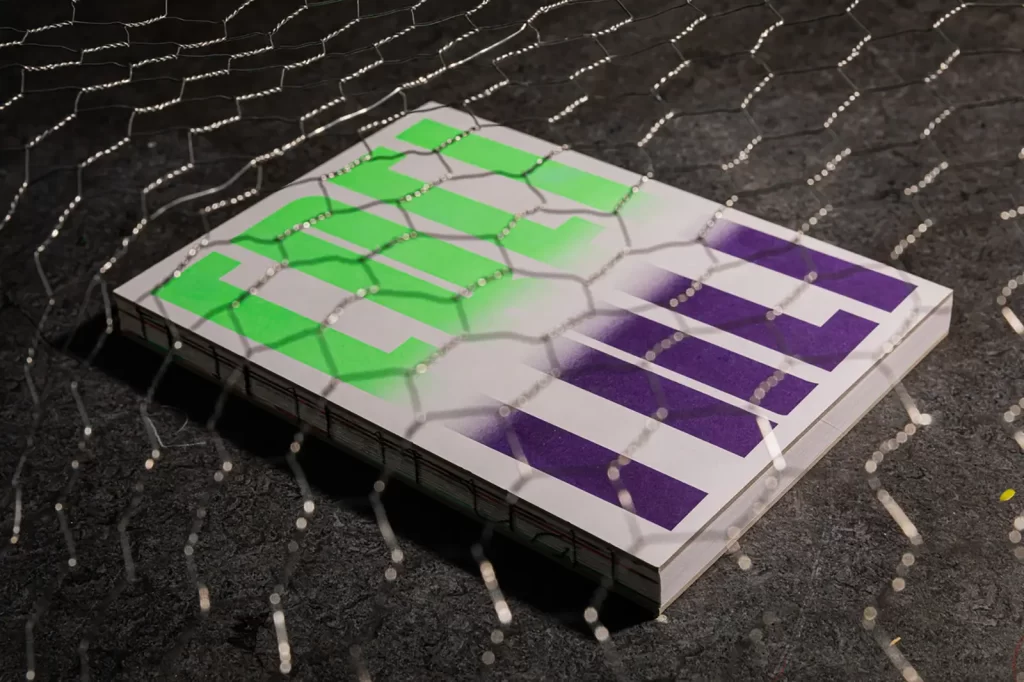
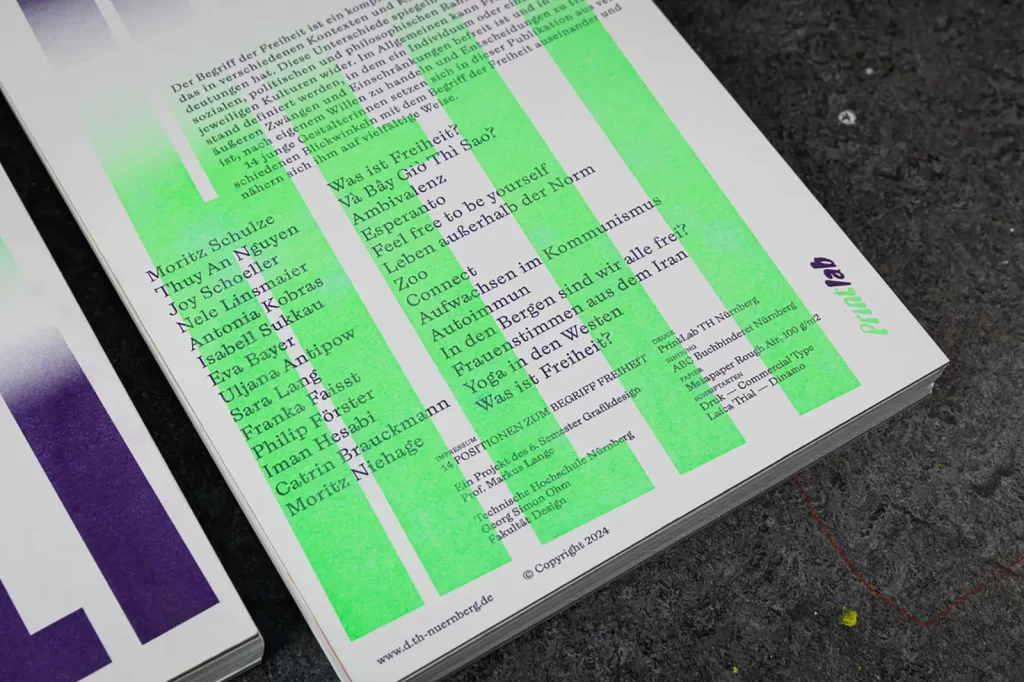
In their sixth semester, students in Nuremberg have just completed their internships and are about to graduate. During this time, they are expected to learn how to research, develop content themselves, and form their own perspectives. Markus Lange therefore planned to create a book for his graphic design course and assigned the students the task of writing their own texts on the topic of freedom and designing 16 pages each. "Many people are daunted by the prospect of designing an entire book," says Lange, "but the course makes it less daunting because you approach the task collaboratively." Tasks related to book production were divided up and thus spread across many shoulders, but the students had to develop their own pages themselves and then print them on the risograph. The group of 14 met only twelve times before a finished book was produced, from the first meeting to the printing of the pages. It was a tight schedule, but Markus Lange just laughs, saying that project cycles are often much tighter in professional life. And there were many other lessons to be learned in the course. In order not to completely exceed the time frame, the students were only allowed to print with a maximum of two colors—a restriction that was irritating for many. "It was important to me," says Lange, "that the students move away from the four-color thinking they are used to from computers. They should learn how the printing process influences the design."
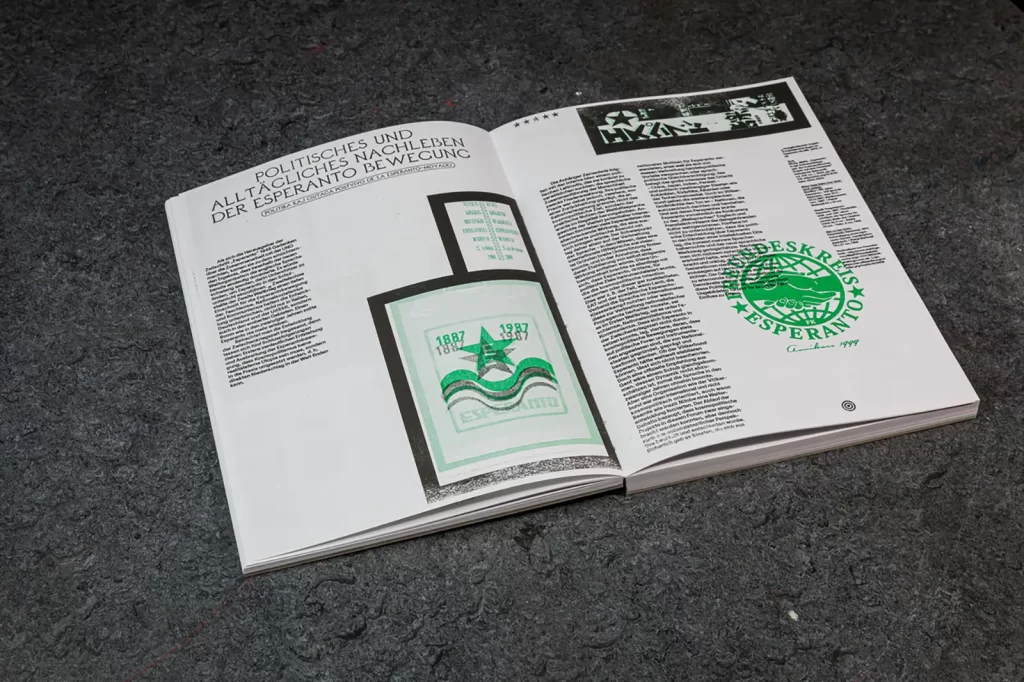
The limitations forced the young creatives to find new solutions and taught them that even coincidences or traces of craftsmanship in printing can lead to appealing results. The project was also not a free-for-all when it came to paper; printing was done on Metapaper Rough Air, which is well suited for risography, and further processing also had to stay within budget. "It's important for designers to realize that their decisions incur costs," says the lecturer, but restrictions are always an opportunity to get creative.
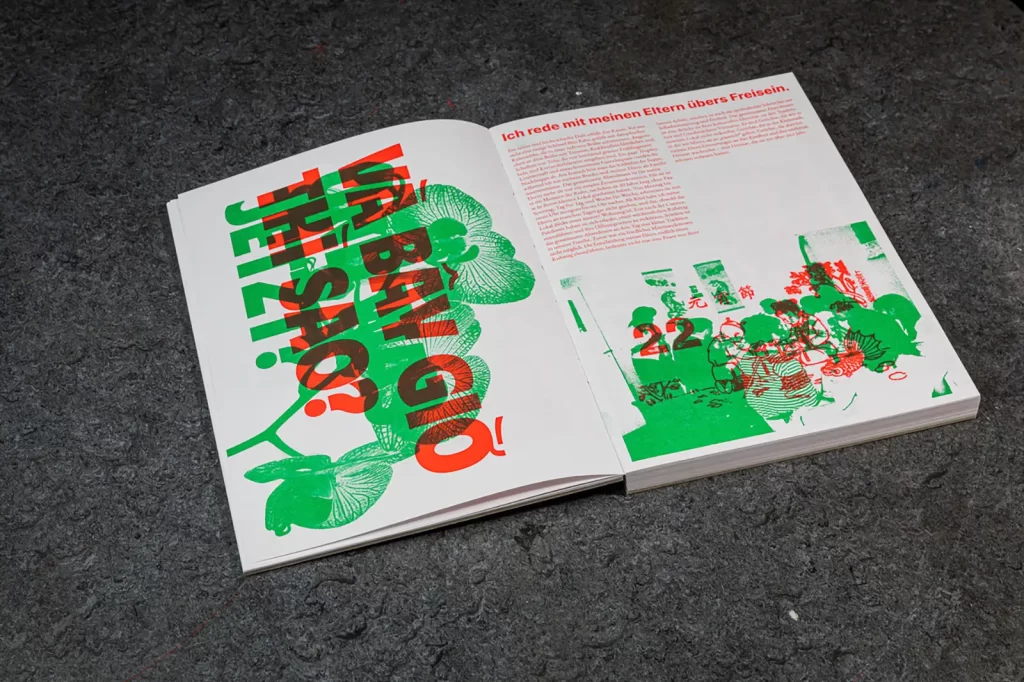
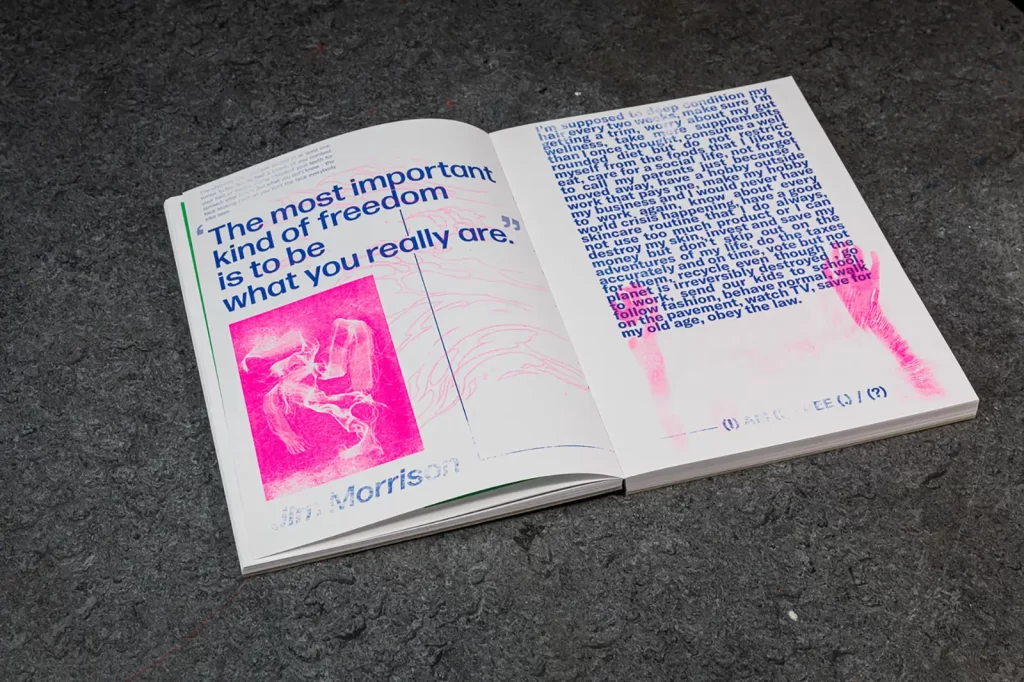
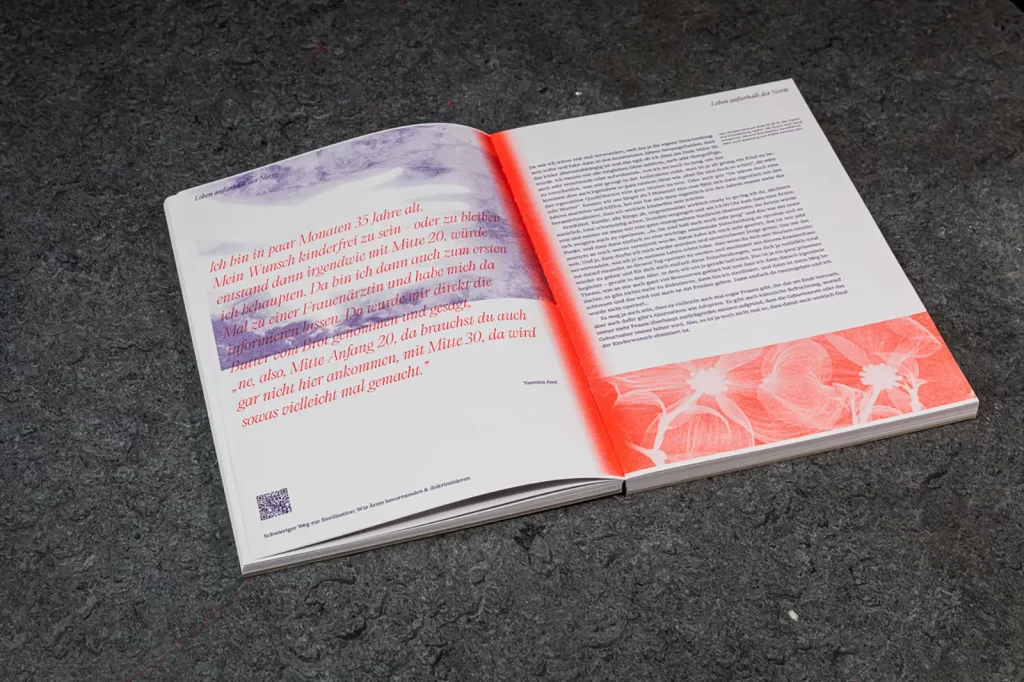
In the end, the 14 students were richly rewarded with a high-quality book that showcased their own work to its best advantage. And they learned that working together and supporting each other helps you make better progress in design. "It's great to see when the light bulb moment happens," recalls Markus Lange. "Design is simply a team sport."
More student work and a focus on education can be found in issue 02.24 here: grafikmagazin.de
More information about the Design program is available on the TH Nuremberg website: th-nuernberg.de