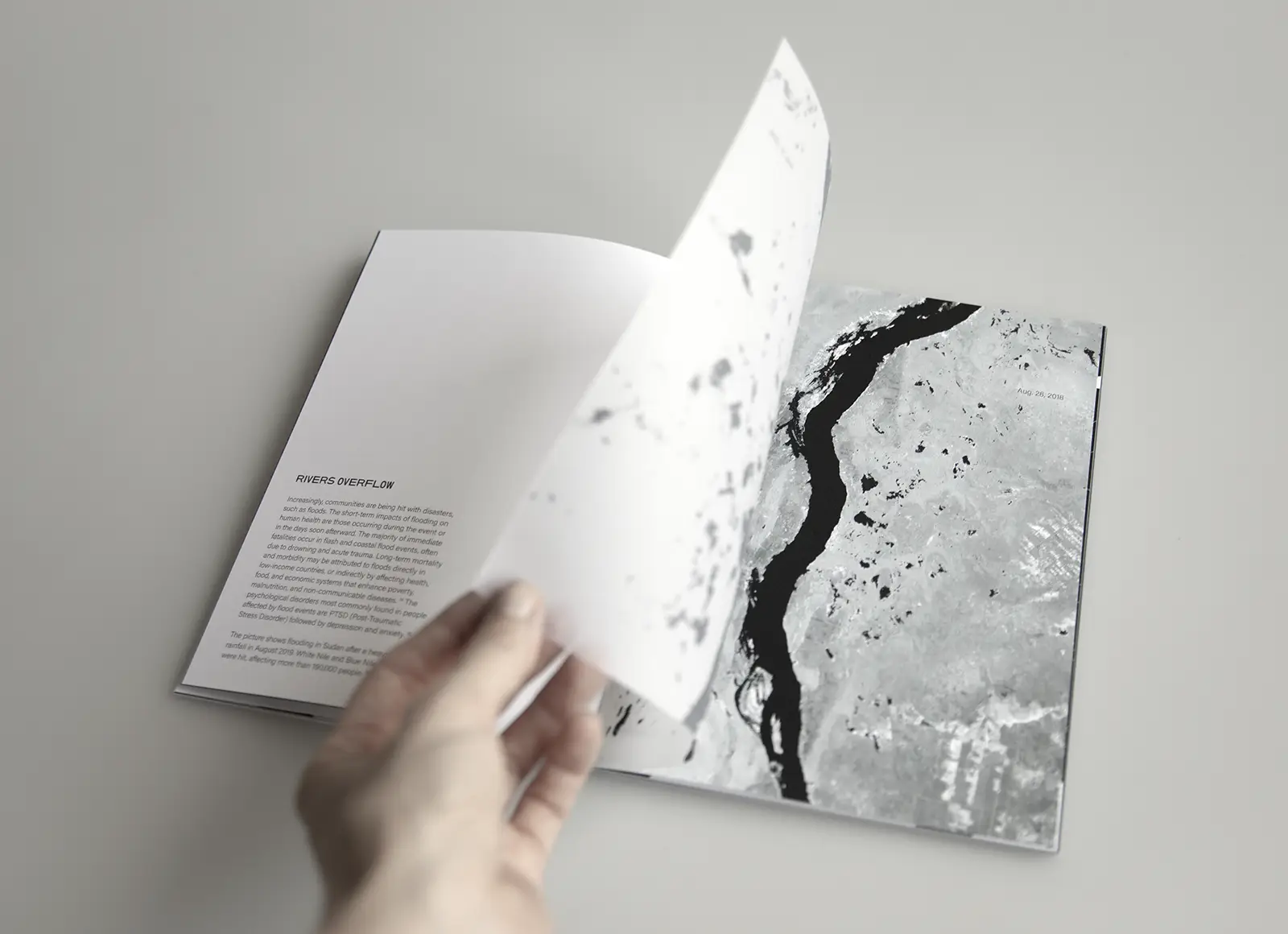
We don't actually lack the knowledge to understand the research results, but that's another matter entirely. In her master's thesis, Emily Gelbert attempts to visualize climate data in an understandable way, deliberately focusing on print in order to encourage more intensive engagement with the content.
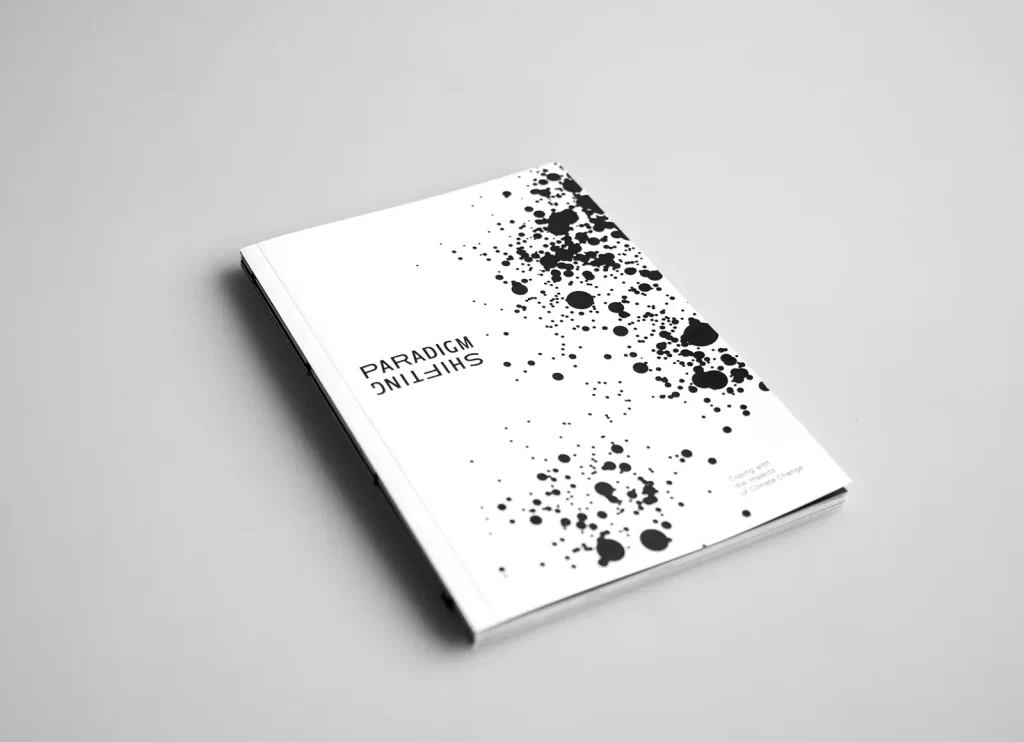
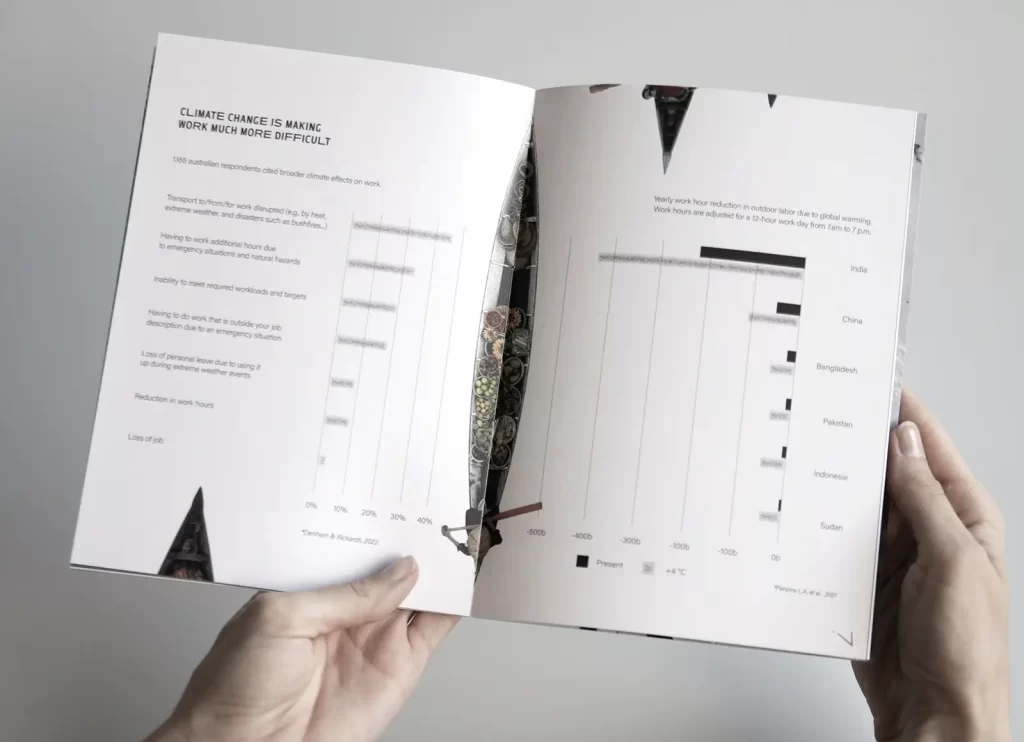
"As a child, I thought that if flooding ever occurred, it would be from the nearby Rhine. No one would have thought that the much smaller Ahr, which in some places is only knee-deep, could pose a threat. Nevertheless, things turned out differently in 2021, and my home region became the focus of the climate crisis due to the Ahr Valley flood," writes Emily Gelbert. For the designer, the otherwise abstract concept of climate change took on a very personal dimension. However, Gelbert also knows from her own experience how difficult it is to perceive and understand the wealth of knowledge that is actually available. For her master's thesis in Social Design & Sustainable Innovation at the SRH University of Applied Sciences for Design and Communication, she therefore focused on the communication and visualization of scientific climate data. The IPCC report, for example, regularly publishes the current state of knowledge on climate change, but those who are not trained in the field quickly lose track. "My work addresses this communication barrier," explains Gelbert. "Based on the findings of the IPCC Synthesis Report 2023, the 'Paradigm Shifting' project illustrates the often less obvious effects of climate change and highlights both possible strategies and measures for dealing with them."
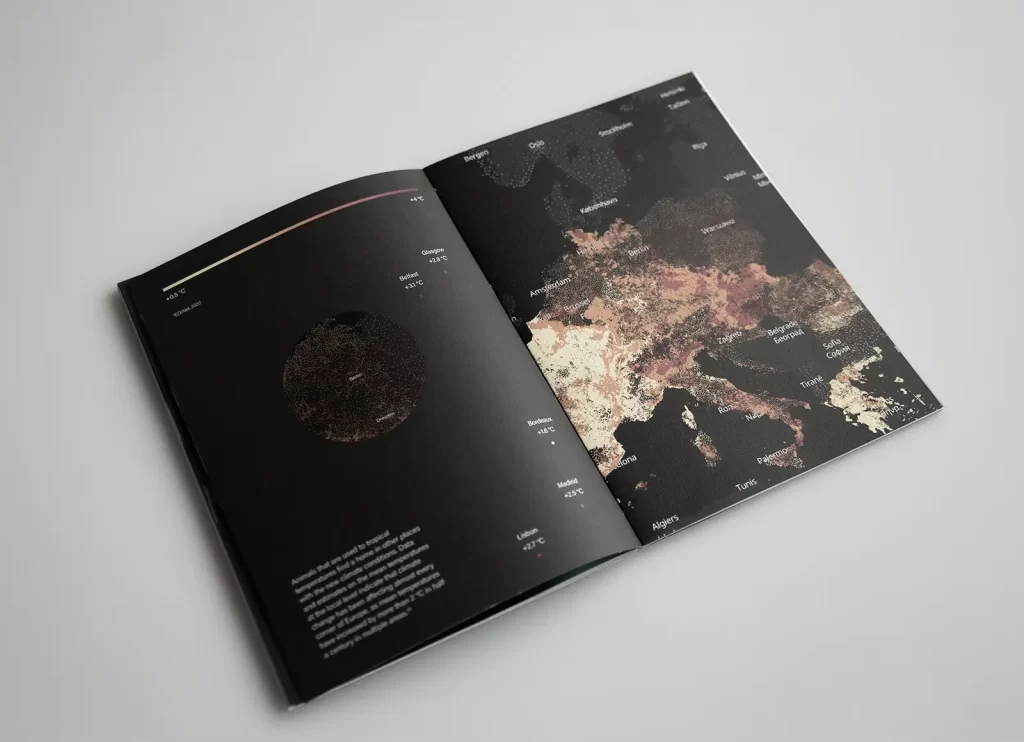
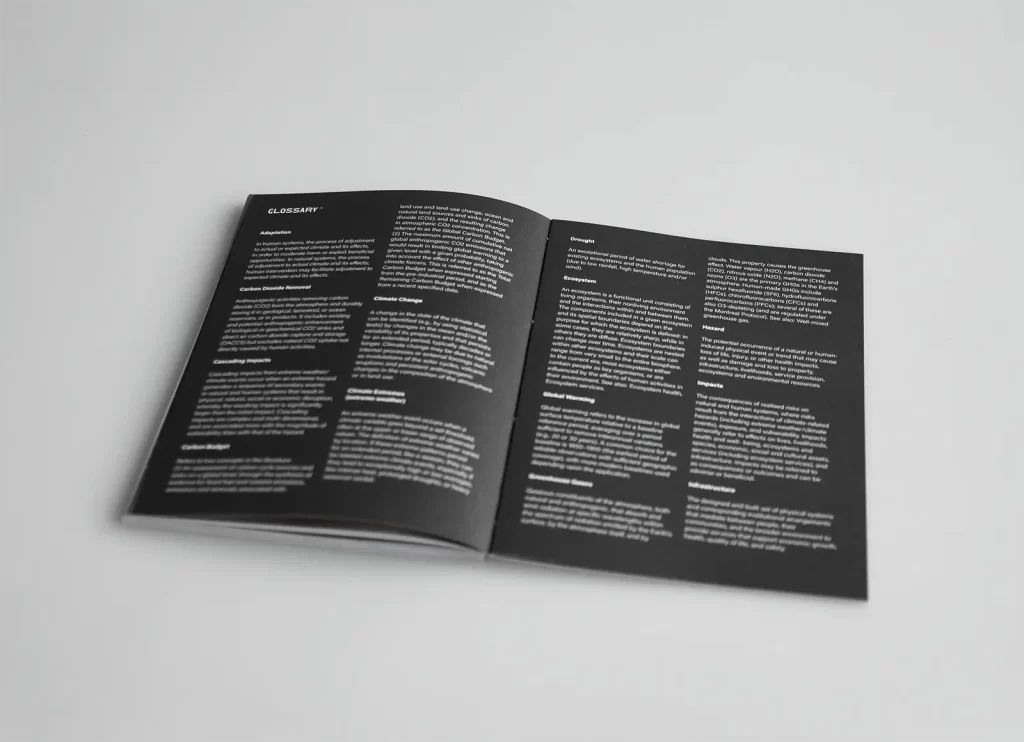
But Emily Gelbert felt it was important not just to describe what could happen. For her, the change of perspective—as implied in the title of her work—means above all that we must learn to adapt to climate change. The information in "Paradigm Shifting" is conveyed in a very minimalist way, and Gelbert used only a few colors in addition to the primary colors black and white, which are based on the so-called warming stripes. She opted for print in order to achieve greater interaction and connection with the content through the haptic experience. The book itself is smaller than A5 and has around 80 pages printed on recycled paper. For the font, the designer opted for the understated Acumin Variable Concept and used Ambiguity Radical for the word mark and headings. "Climate change is complex and radical – just as the fight to curb it must be," she explains. "I wanted to emphasize these multifaceted aspects with the font as well." The choice of paper also supports the theme, as the use of transparent paper makes it easy to visualize changes and connections, such as the decline in snow cover. Emily Gelbert also came up with something special for the numbering: instead of page numbers, she used a countdown that slowly moves toward twelve o'clock. However, the last chapter does not end at midnight, but one minute before—Gelbert's message: we can still take action.
More information about the project is available at www.emilygelbert.de.
The master's degree program in Transformation Design & Print at the Berlin University of Applied Sciences (BHT) combines sustainability and design. Find out more here: grafikmagazin.de